On December 11, 1977, a busload of professional football players sat inside the Louisiana Superdome, thirteen minutes from a moment nobody outside Tampa believed would ever come. When the clock hit zero, the scoreboard read Tampa Bay 33, New Orleans 14. Grown men wept in the visiting locker room. Back home, thousands of fans drove to team headquarters to wait for a plane carrying a team that had never once, in twenty-six tries, won an NFL game.
That is not an exaggeration for effect. It is the literal record. The Tampa Bay Buccaneers lost their first twenty-six games as a franchise, still the longest losing streak in NFL history. To understand why that number still gets repeated on message boards and printed on T-shirts fifty years later, you have to start at the beginning, with a team that had no players, no history and, for a while, no idea how to score a touchdown.
An expansion team with nothing to build on
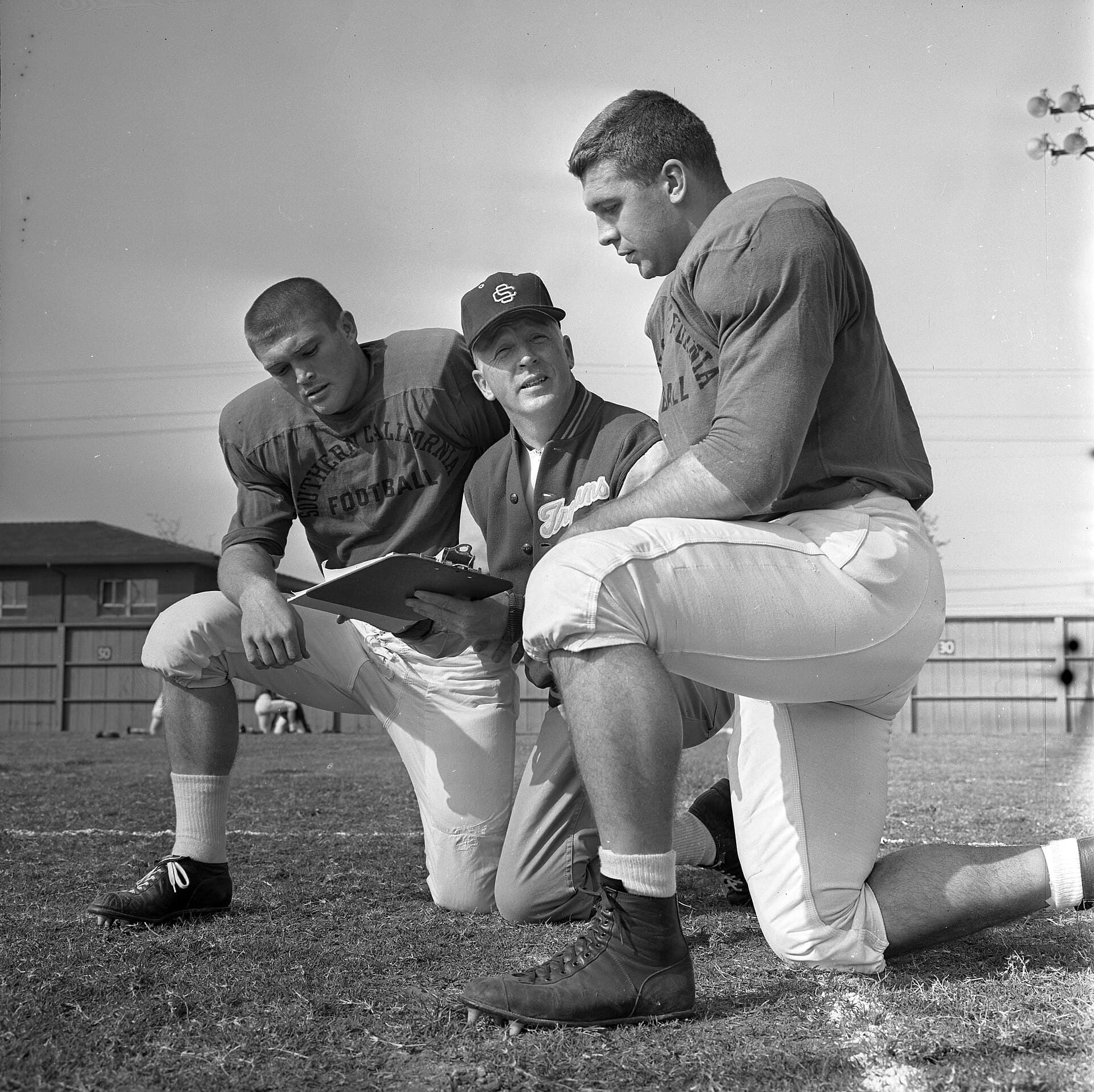
The NFL awarded Tampa Bay an expansion franchise on April 24, 1974, and the league stocked the roster the way it always did for new teams: with the players other franchises were happy to give up. John McKay, who had spent sixteen seasons at USC compiling a 127-40-8 record and four national championships (1962, 1967, 1972 and 1974), took the head coaching job and the general manager title with it, betting his college success would translate to the pros.
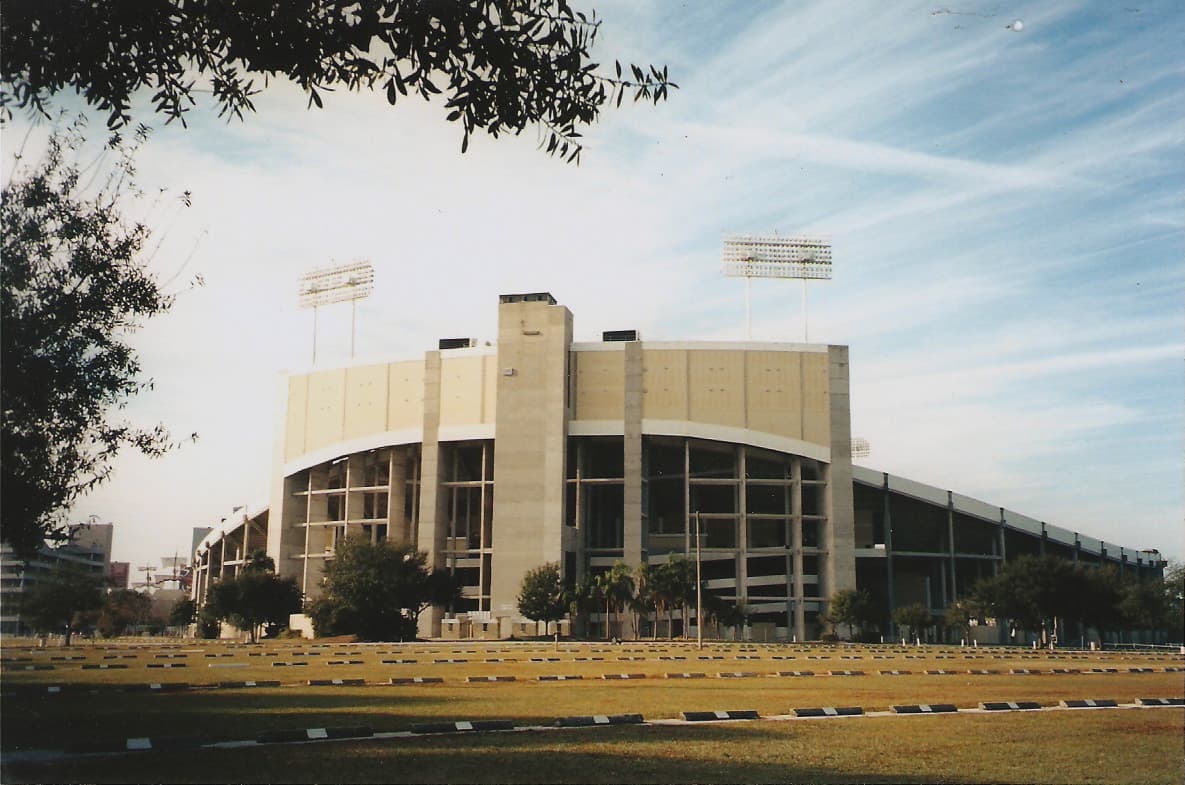
It did not, not right away. The 1976 Buccaneers were outscored 412-125 across fourteen games, an average margin of roughly 20.5 points, the worst point differential of any team since the NFL-AFL merger. They were shut out five times, including their season opener in Houston (where the team reportedly got lost inside the Astrodome before kickoff) and their home debut at Tampa Stadium. Their best chance to avoid a shutout loss came in week 8 against Kansas City, when they trailed by only nine points late in the fourth quarter before the Chiefs pulled away. Tampa Bay finished 0-14, the first team since the merger to go winless and tie-less across a full season.
Heisman Trophy winner Steve Spurrier started twelve of those fourteen games at quarterback, throwing seven touchdowns against twelve interceptions behind an offensive line still being assembled from spare parts. It was not a talent problem so much as a roster-construction problem: an expansion team with almost no continuity, facing opponents who had been building rosters for years.
McKay's jokes carried a losing team through its worst days
What separated those Buccaneers from other bad teams was their coach's refusal to pretend things were fine, or to pretend they were tragic either. McKay had a reporter's gift for the one-liner, and Tampa Bay's front office leaned into it because there was little else to sell.
Asked once what he thought of his team's execution, McKay reportedly answered, "I'm in favor of it." When a kicker admitted he was nervous before a game, McKay told reporters, "That's unfortunate, as I plan on attending all the games." After another blowout, he summarized the defense with, "We can't stop a pass or a run. Otherwise, we're in great shape." And when someone asked if the losing would ever end, he offered the line that has outlived every other quote from that era: "We'll be back. Maybe not in this century, but we'll be back."
The jokes did something practical. They gave a humiliated fan base a way to laugh instead of look away, and they gave the players cover to keep working through a stretch of football that would have broken plenty of locker rooms. Players also found their own ways to cope: several reportedly held postgame gatherings at quarterback Steve Spurrier's house rather than face the public after another loss, and running back Manfred Moore, waived by Tampa Bay after week 13 of the 1976 season, was picked up by the Oakland Raiders in time to be part of that franchise's Super Bowl XI championship team. [CHECK: confirm Manfred Moore's waiver by Tampa Bay and subsequent claim by Oakland in a second source]
Twelve more losses before the streak finally broke
The NFL still played a fourteen-game schedule in 1977 (the move to sixteen games came in 1978), and Tampa Bay opened its second season by losing its first twelve games of that slate too. Combined with the 0-14 of 1976, that put the losing streak at twenty-six games, still an NFL record nobody has come close to since.
The streak ended on that December afternoon in New Orleans. Tampa Bay's defense intercepted Saints quarterback Bobby Douglass three times and returned three of those turnovers for touchdowns, turning what had been a tight game into a 33-14 rout. The Saints fired head coach Hank Stram not long after. A week later, on December 18, the Buccaneers beat the St. Louis Cardinals 17-7 at home, their first win in front of their own fans. Tampa Bay finished the 1977 season 2-12, a modest record by any normal measure, and the best two weeks in franchise history up to that point.
A frustrating step back before the leap forward
The good feeling did not carry directly into the next season. The NFL expanded to a sixteen-game schedule in 1978, and Tampa Bay, now with its first ever draft class taking shape, finished 5-11, fifth in the NFC Central. McKay, who had taken over full control of the draft that year, called the season simply "frustration," and argued that a healthier roster would have been good enough for a winning record.
There were real signs of progress buried in that 5-11 finish. Tight end Jimmie Giles, acquired in a trade, became a legitimate receiving threat. Nose tackle Dave Pear made the Pro Bowl, the first Buccaneer ever selected. Linebacker Richard Wood set a franchise record with 168 tackles that stood for fourteen years, and it was Wood who later observed that opposing players seemed to play harder against Tampa Bay specifically to "teach McKay a lesson," a small sign of how loudly McKay's needling of the rest of the league carried. [CHECK: exact date and outlet of the Richard Wood "teach McKay a lesson" quote]
Lee Roy Selmon gave the losing years a foundation
Buried inside those miserable early seasons was the player who would become the first cornerstone of the franchise. Lee Roy Selmon, a defensive end out of Oklahoma who had already won the Lombardi and Outland trophies as college football's best lineman, was Tampa Bay's first-ever draft selection in 1976.
Selmon anchored a Buccaneers defense that was frequently the only competent unit on the field during the 0-26 stretch. He went to six straight Pro Bowls, was named the NFL's Defensive Player of the Year in 1979, and in 1995 became the first Buccaneer inducted into the Pro Football Hall of Fame. Long after the losing streak became a historical footnote, Selmon remained proof that the early Buccaneers, for all their futility, were not devoid of real talent.
Doug Williams arrives, and the roster starts to turn
The other building block arrived in the 1978 draft, when Tampa Bay took Grambling State quarterback Doug Williams 17th overall, making him the first Black quarterback ever selected in the first round of an NFL draft. Williams started ten games as a rookie, including one he finished with a broken jaw wired shut, and was a unanimous choice for the league's All-Rookie team that year.
Paired with a defense built around Selmon and a young secondary, Williams gave the Buccaneers something they had never had: a passer capable of winning games rather than merely surviving them.
1979: from national joke to NFC Central champions
Three years after going 0-14, and two years removed from a 26-game losing streak, Tampa Bay finished the 1979 season 10-6 and won the NFC Central division, its first winning season in franchise history. Running back Ricky Bell became the team's first 1,000-yard rusher, and the defense that had once been the lone bright spot in a lost cause now anchored a genuine playoff contender.
The Buccaneers beat the Philadelphia Eagles 24-17 in the divisional round on December 29, 1979, with Bell rushing for 142 yards and two touchdowns, the franchise's first postseason win. A week later, in front of their own fans at Tampa Stadium, the Buccaneers lost the NFC Championship Game 9-0 to the Los Angeles Rams, unable to convert either of two would-be touchdowns that were wiped out by penalties. Tampa Bay came within one win of Super Bowl XIV in barely its fourth season of existence.
From 0-14 to the NFC title game, season by season
SeasonRecordWhat happened
1976
0-14
First season in franchise history, outscored 412-125
1977
2-12
26-game losing streak snapped Dec. 11 at New Orleans (33-14); first home win Dec. 18 vs. St. Louis (17-7)
1978
5-11
Doug Williams' rookie season; Dave Pear becomes the first Buccaneer Pro Bowler
1979
10-6
First winning season; NFC Central champions; first playoff win (beat Philadelphia 24-17); lost NFC Championship Game 9-0 to the LA Rams
McKay stayed nine years, through the worst and the best of it
McKay coached the Buccaneers for nine seasons, from 1976 through 1984, finishing with an NFL record of 44-88-1 and three playoff appearances, a losing tenure by the numbers but one that included the fastest rise from an 0-14 expansion team to a conference title game in NFL history at the time. He reportedly admitted, long after leaving USC for Tampa, that he had realized within his first week on the job that taking the position had been a mistake. Whatever regret he carried privately, he stayed and coached through all of it, jokes intact, until 1984.
Why 0-26 still matters
It would have been easy for the Buccaneers to bury the memory of 1976 and 1977 once the team started winning. Instead, the losing streak became part of how the franchise, and its fans, talk about themselves. Sportswriters at the time nicknamed the expansion Buccaneers "the Yucks" for their comic ineptitude. [CHECK: origin and first documented use of the "Yucks" nickname]
There is a reason that nickname stuck around instead of fading with the losses. Every fan base with a long history has a version of this story: a period so bad it becomes communal, something older fans can tell newer ones about and something a franchise can point to and say, we survived that, and three years later we were one win from the Super Bowl. For a club now watched from Munich to Manila largely because of what came decades later, from Lee Roy Selmon's bust in Canton to a Super Bowl parade on the Hillsborough River, the 0-26 streak is the origin story. It is the reminder that this franchise's identity was forged first in humiliation, then in the stubbornness of a defensive end from Oklahoma, a quarterback from Grambling and a head coach who decided the only sane response to disaster was a punchline and another season.